A field case study and checklist for homeowners + trades
Rusty-looking hot water is one of those problems that can drive everyone crazy: homeowners, property managers, and contractors. It’s especially frustrating when it shows up in a newer home, because nothing “should” be rusting.
This post is a real-world case study of a rusty hot water issue we chased, what it ended up being, and the checklist we now use so we can find this faster next time.
The Symptom
We started seeing intermittent rusty discoloration in the domestic hot water (DHW) system. It wasn’t constant, which made it harder to diagnose. Sometimes the water looked fine, other times it didn’t.
Because the home was newer, the symptom felt out of place, and that’s what sends people down the wrong path.
What It Ended Up Being (Root Cause)
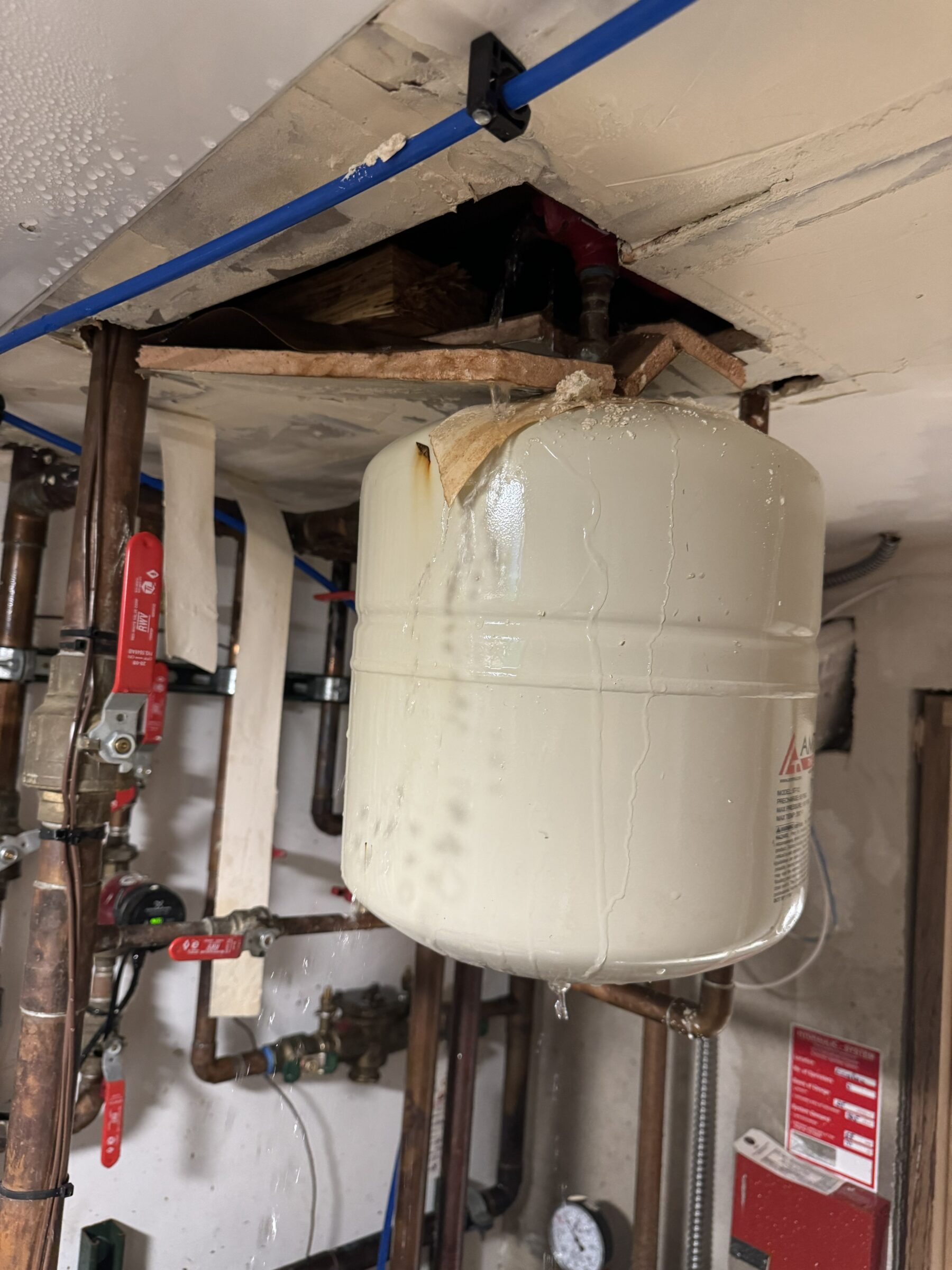
The source was in the mechanical room at the DHW expansion tank connection.
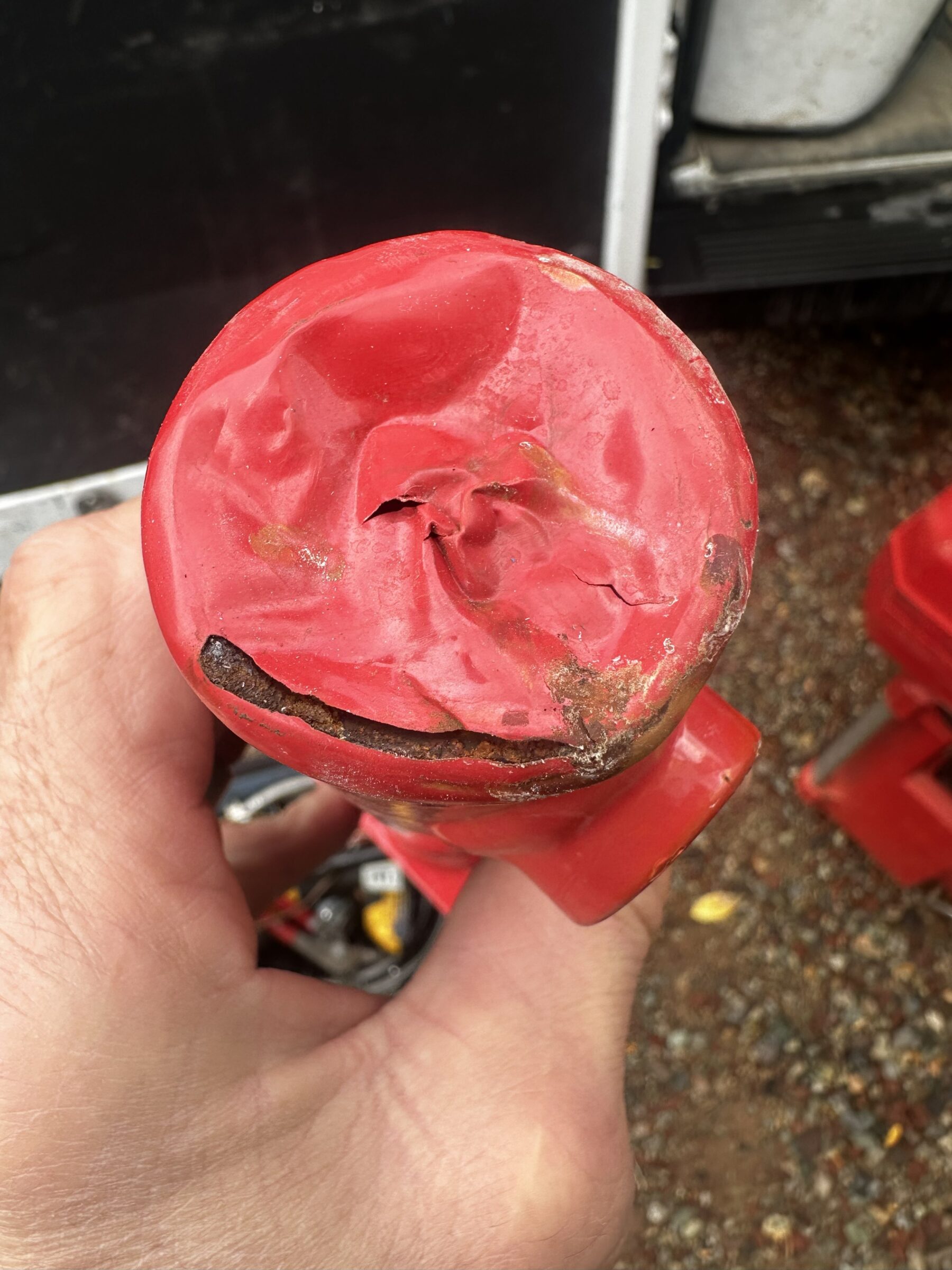
A ferrous (steel) component in the expansion tank assembly was not specified for potable-water service. Over time, it corroded and released iron oxide byproducts into the DHW system. That corrosion is what created the rusty-water symptom.
We ultimately confirmed the exact source when the component corroded through and failed, creating a mechanical-room leak that exposed the culprit.
Failed part
Why This Can Look “Intermittent”
One localized corrosion point can create system-wide symptoms that come and go depending on:
-
changes in flow (showers, tubs, recirculation),
-
temperature swings,
-
pressure/expansion events,
-
and when corrosion byproducts break loose internally.
That’s why this issue often gets misdiagnosed as a water heater problem or a supply problem.
The Checklist We Use Now
If someone reports rusty hot water, here’s where we look first.
1) Start at the DHW expansion tank connection
Don’t assume the whole system is the issue. Inspect the expansion tank connection hardware closely:
-
mounts/supports,
-
fittings and adapters,
-
nipples/unions,
-
and anything that could be ferrous or mixed-metal.
2) Verify potable rating and materials
For DHW, confirm the components in that assembly are appropriate for potable-water service (commonly stainless/brass/bronze depending on the design intent). A single incompatible part can cause a whole-house symptom.
3) Look for “quiet clues”
Rust staining, orange residue, scale, or a slow weep at fittings can be the breadcrumb trail.
4) Take intermittent symptoms seriously
If it’s inconsistent, it doesn’t mean it’s “nothing.” It often means something is actively shedding corrosion byproducts intermittently.
The Takeaway
This one took longer than it should have, but it added a valuable tool to our diagnostic bag.
If you’re dealing with rusty hot water, especially in a newer home, start by checking the DHW expansion tank connection in the mechanical room. One incorrect or incompatible component can contaminate the entire system and mimic much bigger problems.
If you’re seeing something similar and want a second set of eyes, feel free to reach out.